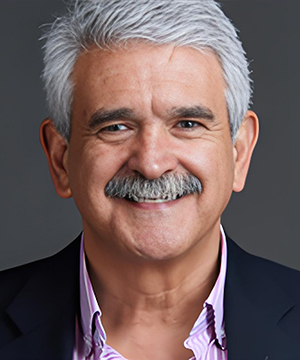
João Carlos Gonçalves Lanzinha
Associate Professor, University of Beira Interior, Portugal.
Research Interests: Civil engineering, construction engineering and architectural engineering.
More Information >>
João Carlos Gonçalves Lanzinha. Completed the PhD in Civil Engineering in 2006 by UBI - University of Beira Interior, Master (2ys.) in Civil Engineering in 1998 by FCTUC - Faculty of Sciences and Technology, University of Coimbra and Graduation (5ys.) in Civil Engineering in 1983 by FEUP - Faculty of Engineering, University of Porto. Is Pro-Rector and Associate Professor at UBI - University of Beira Interior. Published 39 articles in journals. It has 9 section(s) of books and 2 book(s). Has 1 patent(s) registered. Organized 15 event(s). Supervised 6 PhD thesis(s) and co-supervised 7. Supervised 46 MSc dissertation(s) and co-supervised 16. Co-supervised 3 work(s) of course completion of LSc/BSc. Has received 4 awards and/or honors. Participates and/or participated as Researcher in 12 project(s). Works in the area(s) of Engineering and Technology with emphasis on Civil Engineering, Construction Engineering and Architectural Engineering.
In their professional activities interacted with 200 collaborator(s) co-authorship of scientific papers. In his curriculum Ciência Vitae the most frequent terms in the context of scientific, technological and artistic-cultural output are: Rehabilitation; Inspection; Residents; Opinion; Social housing; Construction; Pathologies; Project; Technical inspection; Diagnosis; Pathology; Buildings; Rehabilitation; Architecture; Education; Skills; Multifamily building; Intervention measures; Architectural project; Pereiró neighborhood; Technical inspection - Building; Housing; Health; Risk; Temperature; Relative humidity; Multifamily building; Infrared thermography; Multifamily building; Technical inspection of buildings; Traditional buildings; Hauaymann buildings; Structural characterization; Strengthening; Sustainability; Trombe wall; Thermal performance; Sustainable materials; Ventilation system; Shading devices; Heat gains; Thermal; Basilica of St Augustine; Air pollution; Wall covering; Degradation; Sustainable construction; Sustainability; Energy; Thermal insulation; Drones; Buildings; Facades; Technology; Cork; Building Envelope; Building Rehabilitation; Indoor Air Quality; Housing; Refurbishment; Periodic maintenance; Housing Construction; Technological Evolution; Anomalies; Human Health; Costs; Homeostasis; Architecture and Climate; Architecture - Environmental Aspects; Diagnostic Methods; Performance-based Assessment; Civil Engineering; Civil and Mine Engineering; Geopolymers; Mine Waste Valorization; Green Roofs; Green Roofs and Walls; Energy Efficiency; Sustainable Materials and Binders; Sustainable Construction and Rehabilitation; and so on
Paulo Cesar de Morais
Professor, Catholic University of Brasília, Brazil.
Research Interests: Nanomaterials (magnetorheological fluids, magnetic liposomes, magnetic nanoemulsions, magnetic nanocapsules, magnetic nanofilms, magnetic nanocomposites, nanosemiconductors, polymer dots, carbon dots, and graphene quantum dots): preparation, characterization, and applications.
More Information >>
Paulo C. DE MORAIS, PhD, was full Professor of Physics at the University of Brasilia (UnB) – Brazil up to 2013, Appointed as UnB's Emeritus Professor (2014), Appointed as Guest Professor of Huazhong University of Science and Technology– China (2011), Visiting Professor at Huazhong University of Science and Technology (HUST) – China (2012-2015), Appointed as Distinguished Professor at Anhui University (AHU) – China (2016-2019), Appointed as Full Professor at Catholic University of Brasília (UCB) – Brazil (2018), Appointed as CNPq-1A Research Fellowship since 2010, 2007 Master Research Prize from UnB, 2008-member of the European ERA NET Nanoscience Committee, Member of the IEEE-Magnetic Society Technical Committee, Senior Member of the IEEE Society, 2012 China's 1000 Foreign Expert Recipient, and 2012 Academic Excellence Award from Brazilian Professor's Union. He held two-year (1987-1988) post-doc position with Bell Communications Research – New Jersey, USA and received his Doctoral degree in Solid State Physics (1986) from the Federal University of Minas Gerais – Brazil. He graduated in both Chemistry (1976) and Physics (1977) at UnB. Professor Morais is member of the Brazilian Physical Society and the Institute of Electrical and Electronics Engineers – IEEE. He has served as referee for more than 50 technical journals, takes part of the Editorial Board of more than 15 technical journals and has conducted research on nanomaterials for over 40 years. He has delivered more than 150 Invited Talks all over the World. He is known for his research in preparation, characterization and applications of nanosized materials (magnetic fluid, magnetoliposome, magnetic nanoemulsion, magnetic nanocapsule, magnetic nanofilm, magnetic nanocomposite, nanosized semiconductors, polymeric dots, carbon dots, and graphene quantum dots). With nearly 500 published papers in peer reviewed journals and 15 patents, he has appeared in recent World ranking of top 1% scientists, such as 2020-Stanford and 2022-Research.com.
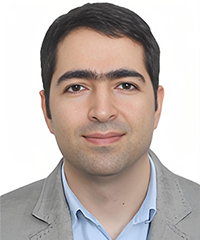
Mohammadreza Vafaei
Associate Professor, Universiti Teknologi Malaysia, Malaysia.
Research Interests: Seismic design and retrofitting of structures, vibration control using passive dampers, and structural health monitoring.
More Information >>
Mohammadreza Vafaei is currently an associate professor in the School of Civil Engineering at Universiti Teknologi Malaysia (UTM), Johor, Malaysia. Prior to joining UTM, he worked with various consulting firms and led the seismic design of numerous structures, including tall buildings, air traffic control towers, airport terminals, water reservoirs, telecommunication towers, and monumental structures. His areas of expertise encompass seismic design and retrofitting of structures, vibration control using passive dampers, and structural health monitoring.
He has been invited as a keynote speaker at several international conferences and workshops. Dr. Vafaei holds several patents and has published over 80 papers in peer-reviewed journals and conferences. He has also been awarded more than 10 international and national research grants and has received multiple gold and silver medals for his innovative products at international exhibitions.
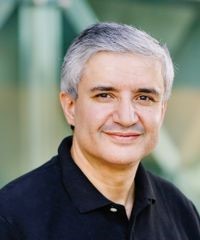
Mohamed-Slim Alouini
Professor, King Abdullah University of Science and Technology, Saudi Arabia.
Research Interests: MIMO techniques; multi-hop and cooperative communications; optical wireless communication systems; cognitive radio systems; green communication systems; underwater/maritime communication systems and integrated ground-airborne-space networks.
More Information >>
Throughout his 30-year academic career, Professor Mohamed-Slim Alouini, an IEEE and OPTICA Fellow, has developed analytical and simulation tools for evaluating the performance of radio-frequency and optical wireless communication systems. He has also designed and optimized innovative technologies for emerging wireless networks. Professor Alouini, a co-founder of KAUST's ECE program, inspires future engineers through his pioneering work in wireless communications. His integrated space-air-ground networks, spectrum sharing schemes, and optical wireless communication systems research shape connectivity's future and embody KAUST's scientific excellence and global impact. Professor Alouini has published numerous conference and journal papers and co-authored the textbook Digital Communication over Fading Channels, published by Wiley Interscience. A former editor of IEEE Transactions on Communications and IEEE Transactions on Wireless Communication, he also served as an editor for IEEE Transactions on Mobile Computing and the Wireless Communications and Mobile Computing journal. He was also a series editor for the IEEE Communication Magazine's Optical Communication and Networks Special Series and the founding field chief editor for the Frontiers in Communications and Networks journal. He is now the Founding Editor-in-Chief for the Nature Partnership Journal (NPJ) on Wireless Technologies (since 2025) and an editor for the IEEE Transactions on Aerospace and Electronics Systems (since 2022). Professor Alouini has been an IEEE Distinguished Lecturer for the IEEE Communication Society (2016-2017), the IEEE Vehicular Technology Society(2018-2022), the IEEE Aerospace and Electronic Systems Society (2023-2024), and the IEEE Photonics Society (2025).
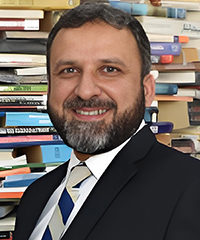
Muazzam Ali Khan Khattak
Professor, Quaid-i-Azam University, Pakistan.
Research Interests: Internet of Things, Internet of Vehicles, Internet of Medical Things, Information & Network Security, Multimedia Encryption and Compression, Block Chain & IOTA.
More Information >>
Prof. DR MUAZZAM A. KHAN KHATTAK (SM IEEE, PAS) currently serving as Director Science & Technology as well Director ICESCO Chair Data Analytics and Edge Computing at Quaid-i-Azam University, Islamabad. He is also listed among Top 2% scientists of the world compiled by Stanford University, USA. Beside that he is also adjunct Professor at University of Missouri, USA and USak University, Turkey. He received his Ph.D. degree in Computer sciences as a sandwich program from IIUI and UMKC, USA in 2011. He received his Postdoc from University of Missouri, KC, USA in 2016. Later Dr. Khattak joined National University of Sciences & Technology (NUST), Islamabad as an Assistant Professor in 2013 and was promoted to Associate Dean and Tenured Associate Professor. He has been at the School of Computer Science, University of Ulm, Germany. He has published 220+ publications with impact factor 400+ and total citations of 5760 and h-index 43. His research interests include Internet of Things, Next Generation Intelligent Networks, BlockChain Based Information and Network Security, Vehicular Ad-hoc Networks and Acoustic Networks.
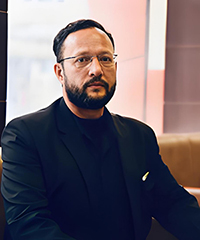
Sudan Jha
Professor, Kathmandu University, Nepal.
Research Interests: Classification, Machine Learning, Supervised Learning.
More Information >>
Dr. Sudan Jha is a Senior member of IEEE and a Professor in the Department of Computer Science & Engineering at Kathmandu University, Nepal, with over 23 years of combined teaching, research, and industrial experience. He is a lead researcher of the IoT R&D lab at Kathmandu University. His previous affiliations include KIIT University, Chandigarh University, Christ University, etc. He was 'Technical Director' at Nepal Television, 'Principal' at Nepal College of IT, and 'Individual Consultant' at Nepal Telecom Authority. He is dedicated to advancing higher education quality and actively works on smart platforms. His extensive research portfolio comprises 85+ SCI, SCIE-indexed research papers and book chapters in international peer-reviewed journals and conferences. He serves as a Co-Editor-in-Chief in an international journal. He also serves as a Guest Editor for SCIE/ESCI/SCOPUS-indexed journals. With three patents to his name, he has authored and edited 7 books on cutting-edge topics in IoT, 5G, and AI, published by Elsevier, CRC, and AAP. His research has also secured funding for two international projects. Additionally, he serves as a Keynote speaker at over 40 international conferences. In addition, he has delivered faculty development programs, short-term training programs, and workshops at national and international conferences, as well as universities. He holds certifications in Microservices Architecture, Data Science, and Foundations of Artificial Intelligence. His primary research interests encompass Quality of Services in IoT-enabled devices, Neutrosophic theory, and Neutrosophic Soft Set Systems.
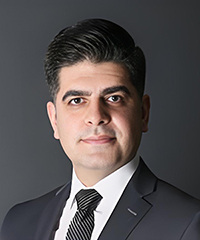
Abdollah Malekjafarian
Associate Professor, University College Dublin, Ireland.
Research Interests: Structural Dynamics, Random Vibrations, and Data-Driven Modelling, with a Strong Focus on Machine Learning and Statistical Learning Methods for Monitoring, Assessment, and Decision Support in Complex Engineering Systems.
More Information >>
Dr. Abdollah Malekjafarian is an Associate Professor in the School of Civil Engineering at University College Dublin, where he leads the Structural Dynamics and Assessment Laboratory (SDA-Lab). He is currently the Head of Graduate Studies in the School of Civil Engineering. His research addresses key challenges in structural health monitoring, anomaly detection, and feature engineering under operational and environmental variability. He develops and applies physics-informed and data-driven approaches across transport infrastructure and renewable energy systems, including offshore wind and other marine structures, with an emphasis on robustness, interpretability, and real-world deployment. His recent work places strong emphasis on translating advanced research into practical tools for industry and policy. He has led nationally funded initiatives focused on offshore renewable energy development, including evidence-based guidance on design flexibility, regulatory frameworks, and environmental impact considerations to support planning, consent, and decision-making in real-world projects. He also develops applied decision-support methodologies for the full lifecycle management of wind energy assets, addressing lifetime extension and condition-based maintenance, to provide actionable frameworks for asset owners, policymakers, and regulators. Dr. Malekjafarian has secured over €3 million in competitive research funding and collaborates extensively with academic, industrial, and governmental partners. He serves on the editorial boards of several international journals, including Engineering Applications of Artificial Intelligence, Shock and Vibrations, Discover Energy, and the Journal of Vibroengineering. He is a member of the Young Academy of Ireland and serves on the Science Communication Committee of the European Academy of Wind Energy.
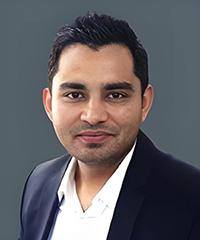
Muhammad Shafique
Assistant Professor, Brunel University London, UK.
Research Interests: Developing an integrated modeling approach based on life cycle assessment and circular economy for sustainable construction and urban mobility.
More Information >>
Dr. Muhammad Shafique is currently a Lecturer (Assistant Professor) in the Department of Civil & Environmental Engineering, College of Engineering, Design and Physical Sciences at Brunel University London, Since May 2022. Prior to this, he was a Postdoc fellow in the Department of Architecture and Civil Engineering at the City University of Hong Kong. He received his Ph.D. degree in Architecture and Civil Engineering from the City University of Hong Kong and M.S in Smart City and Construction Engineering from the University of Science and Technology, South Korea. One of his core areas of work includes developing an integrated modeling approach based on life cycle assessment and circular economy for sustainable construction and urban mobility. Looking forward, Dr. Shafique is determined to fight against climate change and reduce the carbon footprint of the civil and transportation industry as the key considerations while enabling a high level of sustainability and well-being for users. To date, Dr. Shafique has published more than 60 papers in high-impact journals. In addition, Dr. Shafique is a peer reviewer for over 50 high-impact factor journals. Dr. Shafique is the Associate Editor of Frontiers in Energy Research; Frontiers in Sustainability and an Editorial Board Member of the Land, Buildings and Smart Cities (MDPI) journal. Shafique is in the top 2% of most highly cited scientists in the last three years according to the Elsevier/Stanford list.